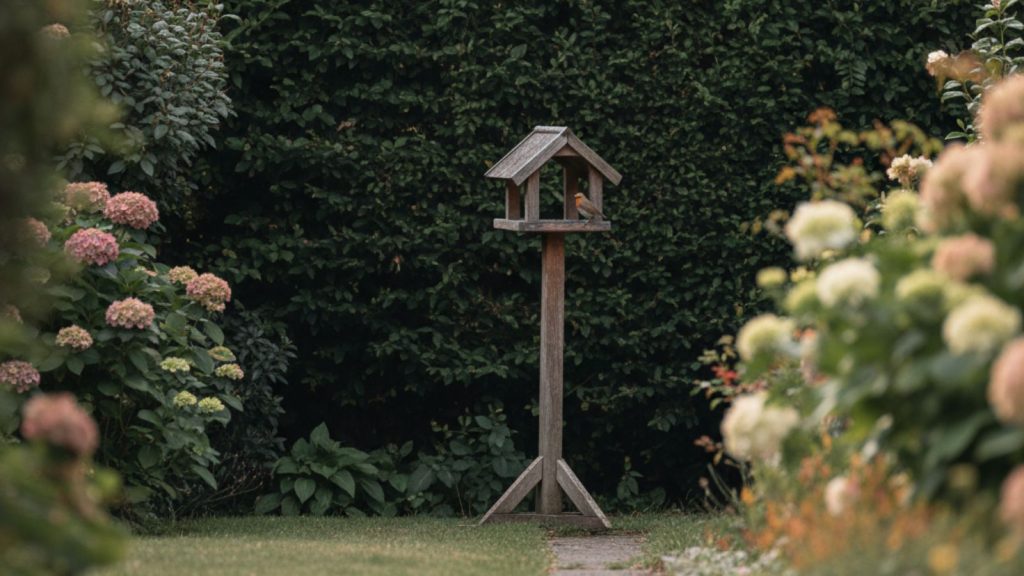
Watching birds in your garden is one of life’s simple pleasures. Wherever you live in the UK, city, suburb, or rural village, gardens provide food and shelter for a surprising variety of bird species all year round.
This guide covers the top 10 birds you might see in your garden, how to spot them, and ways to attract them. No matter your experience level, you’ll find useful tips to make birdwatching more enjoyable.
1. Robin
The European robin is easy to spot in gardens because of its bright red breast and bold nature.
- Size: Small and round
- Sound: Soft, melodic song
- Best time to spot: All year, especially autumn and winter.
Robins are known for being tame and often follow gardeners, looking for insects that get uncovered.
Both male and female robins sing, even in winter when most birds are quiet. Their song is gentle but strong for their size.
Robins mostly eat insects, worms, and spiders, but they also enjoy mealworms, suet, and soft fruits from feeders. They like to feed close to the ground and are often seen on fences.
2. Blue Tit
The blue tit’s bright blue and yellow feathers bring colour to any garden.
- Size: Small
- Diet: Seeds, insects, peanuts
- Best time to spot: Spring and summer. Look for blue tits moving quickly between feeders and shrubs, sometimes hanging upside down or checking small spaces for insects.
The blue tit is easy to identify with its blue cap, white face, yellow chest, and greenish back.
Blue tits are agile and curious, often seen hanging upside down from feeders or searching crevices for insects. In spring, they help control garden pests by feeding caterpillars to their chicks.
They often use nest boxes and raise large families. Their calls sound like a high-pitched “tsee-tsee” and quick chattering.
3. Great Tit
The great tit is bigger than the blue tit and is known for being bold and adaptable.
- Key feature: Black head with white cheeks
- Song: Distinct “teacher-teacher” call
- Best time to spot: All year
The great tit has a black head, white cheeks, olive back, and a yellow underside with a black stripe.
Great tits often use nest boxes and visit feeders, and are sometimes seen chasing away smaller birds.
4. House Sparrow
House sparrows are still common in many gardens and often appear in groups.
- Behaviour: Social and noisy
- Diet: Seeds and scraps
- Best time to spot: All year.
Males have a grey crown, a chestnut-brown back, and a black throat, while females are plainer, brown and grey.
House sparrows are very social and are rarely alone. They chatter a lot and nest together in roofs, hedges, and thick shrubs.
Although they used to be very common, house sparrow numbers have dropped in recent years, so gardens are now more important for them. They mostly eat seeds and grains, but also eat insects when raising chicks.
5. Blackbird
The blackbird is one of the favourite songbirds.
- Male: Black with a yellow beak
- Female: Brown and speckled
- Song: Rich, flute-like melody. Males are black with yellow beaks and eye rings. Females are brown with lighter spots, and young birds are mottled brown.
Blackbirds feed on the ground and are often seen hopping on lawns looking for worms, beetles, and fruit. They can be bold but are easily scared and fly away with a loud call.
6. Wood Pigeon
The wood pigeon is the most common bird you’ll see in gardens in the UK.
- Size: Large and grey
- Sound: Repetitive cooing
- Best time to spot: All year
Some people see wood pigeons as a nuisance, but they play an important role in the garden ecosystem.
Wood pigeons are plump and grey, with a pinkish chest and white patches on their neck and wings. They are noisy at feeders and on lawns, and their cooing can be heard all year.
They eat seeds, buds, berries, and crops, and can live well in both the countryside and cities.
7. Goldfinch
The goldfinch is a favorite in gardens, known for its red face and golden wing bars.
- Diet: Seeds, especially nyjer
- Behaviour: Sociable
- Best time to spot: Late summer and autumn. Look for goldfinches in small groups at seed feeders or on teasel and thistle plants.
The goldfinch stands out with its red face, black and white head, and golden-yellow wing bars.
Goldfinches are sociable and often visit gardens in small flocks, especially in late summer and autumn. They love small seeds and are especially drawn to nyjer seed feeders.
Their song is a light, twittering mix of trills and warbles, often heard while they fly.
If you plant teasels and thistles, you can attract goldfinches to your garden naturally.
8. Dunnock
The dunnock is a shy but common garden bird.
- Appearance: Brown and grey
- Behaviour: Ground feeding
- Best time to spot: All year
People often mistake dunnocks for sparrows. They are quiet and shy, with a slim build, grey head and chest, and a streaked brown back.
Dunnocks mostly stay on the ground, eating insects, spiders, and small seeds. They like quiet spots and low shrubs and usually dart in and out rather than using feeders.
Even though they look plain, dunnocks have interesting and unusual breeding habits, sometimes with several mates.
9. Starling
Starlings are famous for their amazing murmurations and are very smart birds.
- Colour: Dark with iridescent speckles
- Song: Whistles and clicks
- Best time to spot: Spring and autumn
Starlings look dark with a shiny purple and green tint. In winter, they get pale spots on their feathers. They are great mimics and can copy other birds, machines, and even people.
They eat insects, worms, fruit, and suet, and are often seen poking around lawns with their beaks.
10. Magpie
The magpie is easy to recognize with its bold black-and-white feathers and long tail.
- Intelligence: Very high
- Diet: Omnivorous
- Best time to spot: All year
The magpie is related to crows and is very smart. Its black-and-white feathers shine with blue and green in the light.
Magpies can eat many things, including insects, seeds, fruit, and carrion. They are known for solving problems and having strong social ties.
Despite the myths, studies show that magpies do not greatly reduce the number of other garden birds.
How to Attract More Birds to Your Garden
If you want to see more types of birds in your garden, try these tips:
- Provide clean, fresh water year-round.
- Use a mix of seed feeders, suet blocks and ground food.
- Plant native trees and shrubs.
- Avoid pesticides where possible.
For more detailed advice on making your garden welcoming to birds, check out our guide on Attracting More Birds To Your Garden.
Final Thoughts
Gardens are important for wildlife, and even small ones can bring in many birds. By learning about these top 10, you can enjoy the nature right outside your door.
If you’ve enjoyed spotting the birds in your garden, you’re just getting started. Identifying different species is only one step in a much bigger and more rewarding journey into garden birdwatching. Our Start Here page will help you choose the right feeders and food and create a garden that attracts wildlife year-round, so you can build a space where birds thrive.
Whether you love birdwatching or are just starting out, your garden is a great place to begin.