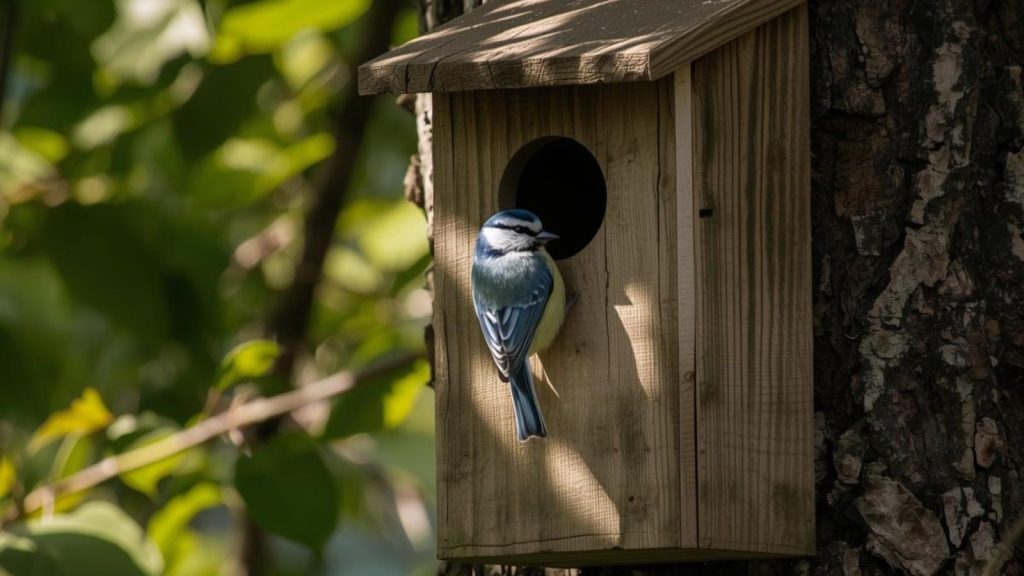
Making your garden wildlife-friendly is one of the simplest and most satisfying ways to help nature in the UK. Many native birds depend on gardens for nesting spots, food, and shelter, especially as natural habitats decline.
If you provide the right mix of trees, shrubs, food, and nesting spaces, you might be surprised by how many birds choose your garden as their home each spring.
In this guide, we’ll explore five bird species that commonly nest in UK gardens, along with tips to encourage them to settle safely in your outdoor space.
1. Robin
The European robin is one of the most well-known garden birds, thanks to its bright orange-red breast and friendly personality.
Robins are quite flexible when it comes to nesting. Rather than just building nests in trees, they often use hedges, ivy, flowerpots, sheds, or even unusual spots like watering cans.
How to attract robins to nest:
- Leave some dense shrubs or ivy for shelter.
- Provide low, open nest boxes designed for robins.
- Offer mealworms, seeds, and suet.
- Keep a quiet corner of the garden undisturbed.
Robins tend to defend their territory strongly, so if one nests in your garden, you’ll likely see it regularly.
2. Blue Tit
The blue tit is a colourful and energetic bird that frequently nests in gardens.
They are cavity nesters, meaning they prefer holes in trees or nest boxes. Because of this, they are one of the most common birds to use garden bird boxes.
Blue tits usually begin nesting in April or May, filling their nests with moss, feathers, and soft plant material.
How to attract blue tits:
- Install a small-holed nest box (25mm entrance).
- Provide sunflower hearts, peanuts, and fat balls.
- Plant native trees and shrubs that support insects.
- Avoid pesticides to keep natural food sources available.
Watching blue tit parents bring caterpillars to their chicks is a highlight of spring for many gardeners.
3. House Sparrow
Once very common, the house sparrow has declined in some parts of the UK, but gardens can still offer great nesting spots.
House sparrows prefer nesting in small colonies, often under roof tiles, in dense hedges, or in specially designed sparrow terrace boxes.
How to attract house sparrows:
- Install sparrow terrace nest boxes.
- Grow thick hedges such as hawthorn or privet.
- Offer mixed seeds and grains.
- Provide dust baths and fresh water.
Because they nest in groups, attracting one pair can quickly lead to several nesting birds in your garden.
4. Blackbird
The Eurasian blackbird is another common garden nester. Males are jet black with bright yellow beaks, while females are brown with speckled chests.
Blackbirds usually build their nests in shrubs, hedges, small trees, or climbing plants about 1–3 metres above the ground.
They prefer gardens that provide cover and natural food sources.
How to attract nesting blackbirds:
- Plant dense shrubs such as holly, yew, or laurel.
- Leave leaf litter and soil areas for worm hunting.
- Provide fruit, mealworms, and soaked raisins.
- Avoid disturbing nesting areas in spring/
If conditions are good, blackbirds often raise two or three broods each year.
5. Wren
Though one of the smallest birds, the Eurasian wren has a surprisingly loud and musical song.
Wrens build dome-shaped nests in sheltered places such as hedges, wood piles, ivy, and dense bushes.
The male wren often builds several nests, and the female picks the one she likes best.
How to attract wrens:
- Leave log piles or brush piles in quiet corners.
- Grow ivy and thick climbing plants.
- Install small wren nest boxes.
- Encourage insects by planting native flowers.
Wrens like quiet, slightly wild parts of the garden, so leaving some areas less tidy can really help.
Create a Garden Birds Love
If you want birds to nest in your garden, focus on three key things:
- Shelter (hedges, shrubs, trees, ivy).
- Food (seeds, insects, berries, feeders).
- Safe nesting spaces (natural spots or bird boxes).
Even small gardens can become great nesting spots when they have these elements.
Start Building a Bird-Friendly Garden
If you’re new to attracting birds, feeding them, and picking the best nest boxes, check out our Start Here page. It covers all the basics—from setting up feeders to creating a garden that birds will keep coming back to.
Final Thoughts
Try not to check nests too often. Disturbing them can make birds abandon their nests, so enjoy watching from afar and let nature do its thing.
With a few easy changes, your garden could soon become a safe nesting spot for some of the UK’s most loved bird species.