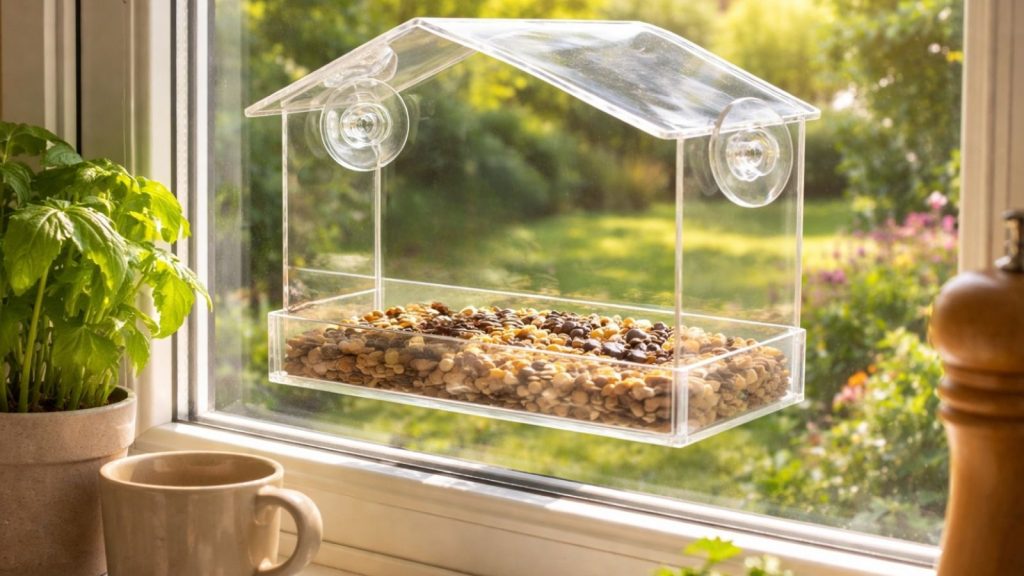
Living in a small space doesn’t mean you have to miss out on the joy of birdwatching. Whether you have a compact garden, balcony, patio, or even just a window, the right bird feeder can transform your space into a peaceful place for local wildlife.
This guide will show you the best bird feeders for small spaces, how to pick the right one, and tips to attract more birds without making a mess or clutter.
This post contains affiliate links. If you purchase through these links, I may earn a small commission at no extra cost to you.
Why Small-Space Bird Feeders Are Worth It
Small bird feeders are compact, efficient, and easy to care for, making them ideal for smaller spaces. But they do more than just save space:
- Bring nature closer. They’re perfect for window views and close-up birdwatching.
- Less waste and mess. Smaller feeders help reduce seed spillage.
- Lower maintenance. They’re easier to clean and refill.
- Flexible placement. You can hang, mount, or attach them to railings.
Just one well-placed feeder can attract a surprising variety of birds.
Best Types of Bird Feeders for Small Spaces
Choosing the right feeder depends on the space you have available and the birds you want to attract.
1. Window-Mounted Bird Feeders (Best for Apartments)
Window feeders attach directly to your glass using suction cups, making them perfect for flats or homes without outdoor space.
Why they’re great:
- Saves space very well.
- Offers amazing close-up views of birds.
- Easy to install and remove.
Top Pick:
Homebird Window Bird Feeder – Durable, clear design with strong suction and easy cleaning access.
2. Hanging Tube Feeders (Best All-Round Option)
Tube feeders are one of the most versatile choices. They can hang from balcony hooks, brackets, or small trees. Making them a great choice when picking a bird feeder.
Why they’re great:
- Compact yet holds plenty of seed.
- Attracts several species, including finches and tits.
- Keeps seed dry and safe.
Top Pick:
Kingsyard 2 Pack Tube Feeders – Slim, weather-resistant, and ideal for tight spaces.
3. Suet Feeders (Best for High-Energy Birds)
Suet feeders are small, vertical cages designed to hold fat-based food blocks. Because they’re so compact, they don’t take up much room at all. They’re excellent for attracting woodpeckers and other insect-eating birds.
Why they’re great:
- A very compact design.
- Provides high-energy food for birds all year.
- Produces minimal seed waste.
Top Pick:
Kingsyard Double Suet Bird Feeder – Durable and perfectly sized for balconies or small gardens.
4. Platform Feeders (Best for Variety)
Platform feeders offer an open feeding space that appeals to birds that prefer ground feeding.
Why they’re great:
- Attracts a wider variety of birds.
- Simple to clean and refill.
- Works well with different types of food.
Top Pick:
Deck Platform Bird Feeder – A sturdy, compact option for small outdoor spaces.
5. Railing Feeders (Best for Balconies)
Railing feeders attach directly to balcony rails, making them one of the most space-efficient options available.
Why they’re great:
- No need for drilling or hanging.
- Very stable.
- Great for urban settings.
Top Pick:
Deck Railing Bird Feeder – Adjustable and ideal for apartment living.
How to Choose the Best Bird Feeder for Your Space
Before making any purchases, consider these key factors:
1. Size & Capacity
Smaller feeders are easier to manage but require more frequent refilling as they don’t hold as much seed as other feeders. Choose a size that matches how much time you want to spend on upkeep.
2. Mounting Type
- Windows: suction-mounted feeders.
- Balconies: railing or hanging feeders.
- Gardens: hanging or pole-mounted feeders.
3. Bird Species
Different feeders attract different birds:
- Tube feeders → finches, tits
- Suet feeders → woodpeckers
- Platform feeders → robins, doves
4. Squirrel Resistance
Depending on where you live, squirrels can still be a problem in small spaces. Look for these features:
- Weight-activated perches.
- Metal cages.
- Slim designs that limit access.
Tips to Attract More Birds to Small Spaces
Even the best feeder needs the right setup to work well. Here’s how to get the most out of it:
Place Feeders Strategically
Place feeders:
- Near cover (plants or shrubs).
- Away from heavy foot traffic.
- Within view for enjoyment.
Offer the Right Food
Different birds prefer different foods:
- Sunflower seeds → most popular.
- Suet → energy-rich, great in winter.
- Mixed seed → attracts variety.
Keep Feeders Clean
Dirty feeders can spread disease; clean them regularly with warm water and mild soap.
Add Water
A small bird bath or water dish can greatly increase visits, even in tiny spaces.
Be Patient
It might take a few days or weeks for birds to find your feeder. Once they do, visits usually pick up fast.
Common Mistakes to Avoid
- Overfilling feeders – Leads to waste and mould.
- Poor placement – Birds won’t feel safe.
- Ignoring cleaning – Can harm birds.
- Using low-quality seed – Won’t attract many species.
Expand Your Bird Feeding Setup
Once you start, it’s easy to get hooked on birdwatching. You can slowly add more feeders or try different foods to attract new birds.
For a full guide on feeder types, bird food, and expert tips, check out our Bird Feeder page, where you will find guides and tips whether you have a big garden or a small balcony.
Final Thoughts
Small spaces can still offer great birdwatching. With the right feeder, good placement, and a little patience, you can attract lots of birds right outside your window.
Start simple, choose a feeder that fits your space, and enjoy the relaxing, rewarding experience of watching birds up close.