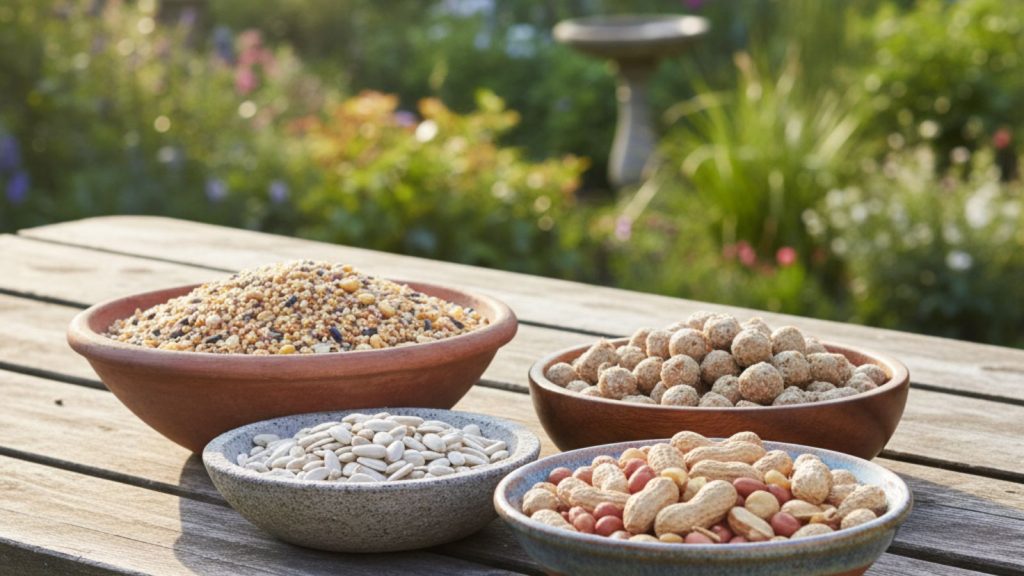
Feeding garden birds is really enjoyable, but it can be hard to know how much food to put out each day.
Putting out the right amount helps keep birds healthy, reduces waste, and prevents problems such as mouldy seed or unwanted pests. This guide explains how much bird food to offer daily, based on common birds, feeder types, and seasonal conditions.
Why Getting the Right Amount of Bird Food Matters
Feeders give garden birds extra food, but they don’t replace what birds find in nature. Giving the right amount each day helps to:
- Keep food fresh and dry, even in damp weather.
- Reduce seed waste and mess.
- Discourage rats and squirrels.
- Support birds during colder months.
A useful tip is to only put out as much food as birds will eat in 24 hours.
How Much Bird Food Should You Put Out Per Day?
Most gardens do well with this daily amount:
75–150 grams of bird food per feeder per day.
This amount works for common garden birds like robins, blue tits, great tits, sparrows, finches, and blackbirds.
Factors That Affect Daily Bird Food Amounts
1. Number of Birds Visiting Your Garden
If you have a small garden with just a few tits visiting, 50–75g per day is enough. If you get flocks of sparrows or starlings, you might need 150g or more.
Add a bit more next time, if the food disappears quickly but if there’s still seed left after a day, put out less.
2. Common Garden Birds and Their Feeding Needs
Different types of British birds eat different amounts:
- Small birds (blue tits, coal tits, goldfinches): eat little but often.
- Medium birds (robins, sparrows, chaffinches): moderate daily intake.
- Larger birds (blackbirds, wood pigeons, starlings): eat significantly more.
If larger birds are taking over your feeders, try increasing the amount or switching to different feeders.
3. Seasonal Feeding
Each season makes a difference in how much food you should offer:
- Winter: Increase food by 25–50% as birds need extra energy to stay warm.
- Spring: Continue feeding, but avoid whole peanuts during nesting unless in a mesh feeder.
- Summer: Birds eat more insects in summer, so you can reduce the amount of food a little.
- Autumn: Increase food because birds are building up fat reserves.
Winter feeding is essential during frost and snow.
4. Types of Bird Food Commonly Used
Some foods get eaten more quickly than others:
- Sunflower hearts: very popular and quickly eaten.
- Peanuts (mesh feeders only): high energy, eaten steadily.
- Nyjer seed: slow consumption, ideal for goldfinches.
- Suet pellets and fat balls: heavily consumed in cold weather.
- Seed mixes: Quality can vary. Try to avoid mixes with lots of wheat fillers.
Picking good-quality food helps cut down on waste and makes it easier to manage how much you feed.
How Much Bird Food by Feeder Type
Here are the usual daily amounts for each type of feeder:
- Tube feeder: 75–125g per day.
- Hopper feeder: 100–150g per day.
- Ground or tray feeder: small handful, refreshed daily.
- Suet feeder: 1 fat ball every 1–2 days (more in winter).
Clean your feeders often to stop the spread of disease, especially when it’s wet outside.
Avoid Overfeeding Garden Birds
Overfeeding can cause:
- Mould growth in damp conditions.
- Seed build-up on the ground.
- Increased rats and pigeons.
- Aggressive behaviour at feeders.
If there’s still food left after 24 hours, try putting out less next time.
Choosing the Right Bird Food
The kind of food you put out affects how much birds eat and which ones visit your garden. Choosing food that suits your birds and the season provides the best nutrition and reduces waste.
To learn more about the best foods for garden birds, like sunflower hearts, peanuts, fat balls, and seed mixes, check out our bird food page.
How to Know You’re Feeding the Right Amount
You know you’re giving the right amount if:
- Feeders are mostly empty after 24 hours.
- Food stays dry and fresh.
- Birds visit consistently throughout the day.
- There is minimal seed left on the ground.
Slowly adjust the amount based on how many birds visit and the weather.
Final Thoughts
For most gardens, 75–150 grams per feeder is about right, and you can give more when it’s cold.
By giving the right amount and picking good quality food, you’ll help garden birds stay healthy and happy all year.