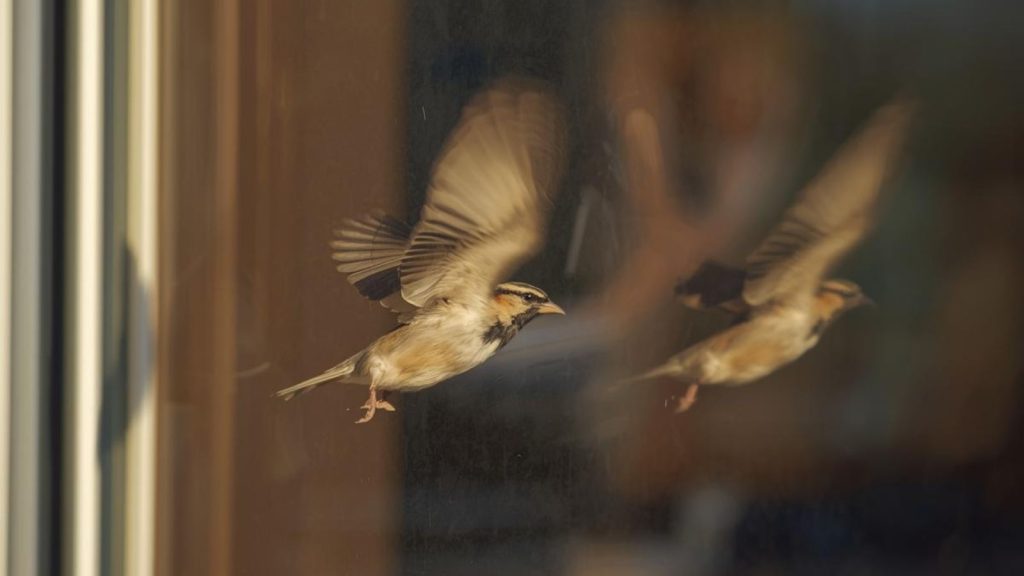
If you’ve heard that sudden thud of a bird hitting your window, you’ll know how worrying it can be.
It’s a common problem in UK gardens, especially in spring— it can feel alarming, but in most cases, it’s something you can fix quickly.
This guide will show you simple, effective ways to stop birds flying into your windows and how to protect them if it happens again.
Quick Fix: How to Stop Birds Hitting Windows
- Add decals or patterns to the outside of glass.
- Move feeders closer than 1m or further than 10m.
- Reduce reflections with plants or blinds.
- Use UV window film for a long-term solution.
Why Do Birds Keep Hitting My Windows?
Birds don’t see glass the way we do. To them, windows reflect:
- Blue sky
- Trees and hedges
- Your garden plants
- Open flight paths
Some birds, like the European Robin, become territorial during the breeding season and may attack their own reflection, mistaking it for a rival.
Reflective glazing and patio doors in urban and suburban areas are especially problematic because they mirror nearby greenery.
Garden Birds Most Likely to Hit Windows
While any bird can collide with glass, the most common species involved include:
- European Robin
- Common Blackbird
- Wood Pigeon
- Great Tit
- Blue Tit
Since these birds are common garden visitors, it’s even more important to prevent window strikes.
The Most Effective Ways to Stop Birds from Hitting Your Windows
You don’t have to try every solution. Most bird window strikes happen because of reflections or where feeders are placed, so fixing these issues usually solves the problem.
1. Make Your Windows Visible to Birds (Most Important)
Birds often fly into windows because they can’t see the glass. Adding visible patterns is one of the best ways to prevent this.
- Use window decals or stickers spaced no more than 5–10 cm apart.
- Apply them to the outside of the glass, not inside.
- Use temporary soap or chalk patterns as a quick seasonal fix.
If the markings are too far apart, birds might still try to fly through the gaps.
2. Reduce Reflections on Glass
Reflections of the sky and trees are a big reason why birds fly into windows. To birds, glass doesn’t exist—it either looks like open sky or a reflection of trees and plants.
To reduce reflections:
- Use external window film (UV film works best).
- Close blinds or curtains during bright parts of the day.
- Add plants, trellises, or shutters in front of windows.
External solutions are most effective because they prevent reflections from forming in the first place.
3. Move Bird Feeders to a Safer Position
This is one of the most common causes of window strikes in garden bird setups. It’s especially common in UK gardens where feeders are placed close to patio doors or conservatories.
If feeders are in the wrong spot, birds might fly straight into the glass when they take off.
Place feeders either:
- Within 1 metre of the window (so birds can’t build up speed), or
- More than 10 metres away.
Making this simple change can greatly reduce bird collisions.
If you’re setting up feeders, see our guide on feeding garden birds in the UK for beginners.
4. Add Physical Protection (Best for Problem Areas)
If birds keep flying into the same window, adding a barrier can help stop them.
- Install external mesh or screens a few centimetres from the glass.
- These barriers absorb the impact and help prevent serious injuries.
They are ideal for conservatories and large glass doors.
5. Make Seasonal or Environmental Adjustments
Some bird collisions only happen during certain times of the year.
- Turn off bright outdoor lights at night during migration.
- Cover windows temporarily during spring (breeding season).
- Territorial birds, such as robins, may attack their own reflections.
If the problem only happens during certain seasons, a temporary fix is usually enough.
6. Consider Long-Term Solutions (If Renovating)
If you are renovating or upgrading your home, consider these options:
- Slightly angled glass reduces sky reflections.
- Combining window film + feeder placement gives the best long-term results.
What To Do If a Bird Hits Your Window
If a bird collides with your glass:
- Carefully place the bird in a cardboard box with air holes.
- Keep the box in a quiet, dark place.
- Let the bird rest for 1 to 2 hours to help it recover.
- If the bird seems alert and active, you can let it go.
Many birds are only temporarily stunned and can recover if left undisturbed. Contact your local wildlife rescue for help if the bird looks badly injured.
Do not try to feed or give water to the bird while it is recovering.
If the bird is young or vulnerable, see what to do if you find a baby bird.
Are Bird Collisions Common?
Window collisions are one of the most common causes of injury for garden birds in the UK. Garden birds are especially at risk because many homes have reflective patio doors and conservatories that face greenery.
The Best Long-Term Solution
If you want a long-lasting solution that doesn’t change how your windows look, try external UV window film or well-spaced decals on the outside.
For homes with many large windows, using both window film and moving bird feeders provides the best protection.
Protecting Garden Birds
Stopping birds from hitting your windows is just one part of creating a wildlife-friendly garden. If you’d like a complete beginner’s guide to garden birds — including feeder placement, seasonal advice, and easy tips, take a look at our Start Here page.
Bird collisions with windows are common—but they’re also preventable.
Even small changes, like adding decals or moving feeders, can make a big difference.
Start with one fix today, and you’ll reduce the risk immediately.