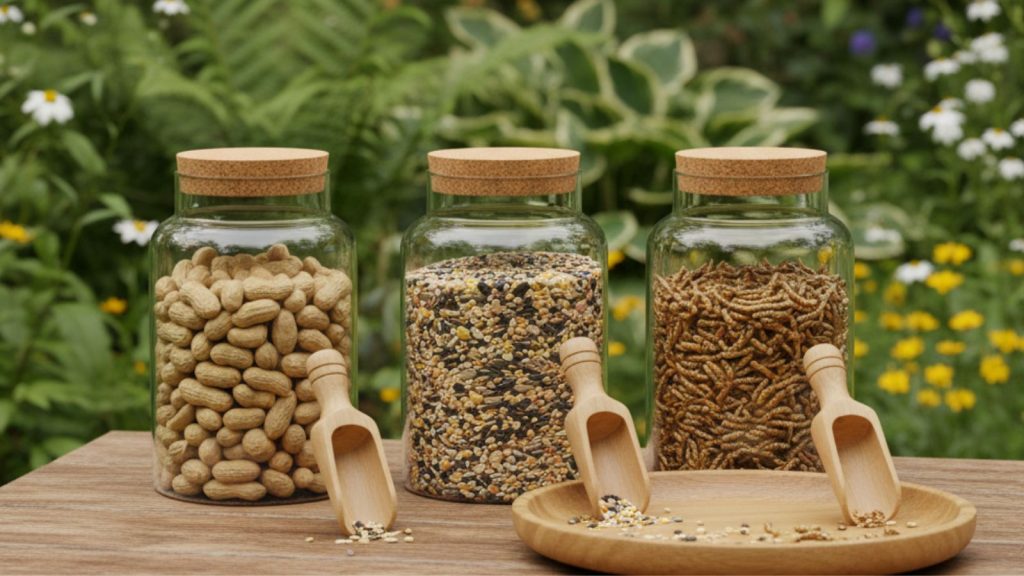
Storing bird food properly is an easy way to attract more wildlife to your garden. When feed is fresh, dry, and well-kept, it keeps garden birds healthy and helps prevent waste, mould, and pests. No matter if you use sunflower hearts, peanuts, suet, or mixed seed, learning how to store bird food properly will help you make the most of every bag.
Below, we explain how to store garden bird food to keep it fresher longer, offering tips to protect your feed year-round.
Why Proper Bird Food Storage Matters
In a damp climate, bird food can spoil quickly if it isn’t stored properly. Moisture is the main problem because it leads to mould, clumping, and bacteria. Giving birds mouldy seed can be harmful and could spread disease.
Proper storage helps to:
- Prevent mould and fungal growth.
- Protect against rodents and insects.
- Maintain nutritional quality.
- Reduce waste and save money.
- Keep feeding stations hygienic.
Fresh food not only keeps birds healthy but also encourages them to return to your garden more frequently.
Choose the Right Storage Container
The best way to store bird food is to use airtight, weatherproof containers.
Recommended options:
- Heavy-duty plastic bins with secure clip lids.
- Metal storage bins with tight-fitting lids.
- Sealed food-grade buckets.
Don’t use thin plastic bags or cardboard boxes for long-term storage because they let in moisture and rodents can chew through them.
If you buy bird food in bulk, split it into smaller sealed containers after opening. This helps keep it safe from air and dampness.
Store Bird Food in a Cool and Dry Place
Where you store bird food is important. Always keep bird food:
- Indoors, where possible (garage, shed, utility room).
- Off the ground to avoid damp transfer.
- Away from direct sunlight.
- In a well-ventilated area.
Don’t store seed in greenhouses or outdoor boxes unless they are properly sealed, since condensation can build up fast.
Keep Different Types of Bird Food Separate
Each type of bird food needs to be stored differently.
Seeds (sunflower hearts, mixed seed)
Keep them completely dry and in airtight containers. If stored well, they can last for several months.
Peanuts
Store peanuts in airtight containers and check them often for mould. Never give birds mouldy peanuts.
Suet blocks and fat balls
Keep in a cool place, especially in warmer months. Refrigeration can help prevent melting during the summer.
Mealworms
- You should keep dried mealworms in an airtight container in a cool cupboard.
- Live mealworms need to be kept in the fridge, and you should follow the supplier’s instructions.
Keeping different types of feed separate stops cross-contamination and makes it easier to check if they’re still fresh.
Watch for Signs of Spoilage
Even if you store bird food well, it’s important to check it often. Throw away any feed that shows:
- Musty or sour smell
- Visible mould
- Clumping or damp texture
- Insect activity
- Discolouration
If you’re not sure whether bird food is still good, it’s best to throw it away. Spoiled food can harm garden birds.
Buy Little and Often (If You Have Limited Storage)
Buying in bulk can save money, but only buy as much as you can store safely and use up in a reasonable time. For most homes, a 1 to 3 month supply works well.
If you don’t have much indoor storage, buying smaller amounts helps prevent spoilage, especially during the wetter autumn and winter months.
Keep Feeding Areas Clean Too
Proper storage goes hand in hand with feeder hygiene. Clean bird feeders every 1–2 weeks with warm, soapy water, then rinse thoroughly. This prevents bacteria from spreading, even if your food is fresh.
Change where you put feeders from time to time to prevent seed from piling up on the ground, as this can attract pests.
Seasonal Storage Tips
Winter
Birds rely heavily on feeders. Keep the seed dry and check supplies frequently, as damp air can still affect storage areas.
Spring
As the temperature rises, there’s a higher risk of insects getting into your bird seed. Make sure your containers are tightly sealed.
Summer
Keep suet in a cool place so it doesn’t melt, and don’t overfill feeders when it’s hot.
Autumn
When humidity is high, it’s even more important to use airtight storage. Look for condensation inside containers.
Final Thoughts: Fresh Food Attracts More Birds
All you need are airtight containers, a dry place, and regular checks to keep your bird food protected. Keeping feed fresh means robins, blue tits, finches, sparrows, and other favourite garden birds get safe, healthy food all year.
If you’re looking for high-quality feed that supports wild birds in every season, explore our complete guide to choosing the right mixes, seeds, suet, and treats on our comprehensive Bird Food page. It covers everything you need to know about feeding garden birds easily.
Keeping bird food fresh is a simple step that makes a big difference for your garden and the wildlife that relies on it.